We are pleased to offer the Tend, Gather and Grow Curriculum as a five-volume set in paperback! Each volume is approximately 160 pages, printed in full-color, and available for individual purchase at $45 per volume or as this complete five-volume set for $225. Click here to purchase individual volumes.
Tend, Gather and Grow is a place-based curriculum for teaching adults and children about plants, local landscapes, and the rich cultural traditions of the Native peoples who are interwoven with them. The curriculum focuses on native and naturalized plants of the Pacific Northwest region and includes Northwest Native knowledge, stories, and plant traditions.
A teaching tool for teachers, mentors, parents, schools, and community organizations. You do not need to be an expert to learn how to teach and share this curriculum. It starts with the basics, and builds from there.
Volume 1: Teacher Guide, Cultural Ecosystems Field Guide, & Ecosystems Garden Guide
The Teacher Guide is an introduction to and overview of the entire curriculum and teaching toolkit, and is fundamental to effective use of this work. The Cultural Ecosystems Field Guide introduces five distinct ecosystem types and the positive role of humans in maintaining these ecosystems’ integrity over millennia. The Ecosystems Garden Guide is a resource to support growing native plants in garden settings, and connecting with traditional Native cultural ecosystems.
Volume 2: Plant Guide Part One (Alder–Hawthorn)
The Plant Guide Part One includes 10 regional plants, each with an overview and multiple hands-on lessons. From Alder to Hawthorn, teachers can choose plants and lessons based on what is available, in season, and most relevant to students. A seasonal calendar is included for quick reference. Each plant covers physical identification, range, seasonality, harvest (if appropriate), preparation, traditional technologies, and ecological relationships. Plants that are at risk of overharvest have not been included unless there is a specific emphasis on restoration.
Volume 3: Plant Guide Part Two (Huckleberry–Yarrow)
The Plant Guide Part Two includes 10 regional plants, each with an overview and multiple hands-on lessons. From Huckleberry to Yarrow, teachers can choose plants and lessons based on what is available, in season, and most relevant to students. A seasonal calendar is included for quick reference. Each plant covers physical identification, range, seasonality, harvest (if appropriate), preparation, traditional technologies, and ecological relationships. Plants that are at risk of overharvest have not been included unless there is a specific emphasis on restoration.
Volume 4: Herbal Apothecary, Plant Technologies, & Tree Communities
Herbal Apothecary includes an overview of plant medicine, with lessons on how to make herbal teas, infused vinegars, honeys, oils, salves, poultices, herbal baths, and aromatherapy. Plant Technologies describes how people have used the physical attributes of plants for millennia to create human technologies. Students explore ways to gather, process, and make useful items including cordage, baskets, mats, tools, and dyes from plant materials. This module is rooted in STEAM (Science, Technology, Engineering, the Arts, and Mathematics) concepts. Tree Communities introduces common Northwest conifer and deciduous trees, and explores identification, ecological relationships, and how trees are valued for food, medicine, and their role in traditional technologies. Lessons include a tree walk, and a deeper look at evergreen conifers. Social-emotional teachings, including collaboration, resilience, adaptability, and generosity, are integrated throughout these lessons.
Volume 5: Wild Food Traditions, & Career Connected Learning Toolkit
Wild Food Traditions focuses on seasonal attunement and ethical harvesting of native and wild plants including spring greens and summer berries, as well as preparation of healthy snacks and traditional beverages. Each lesson includes an extensive overview with plant identification, cultivation practices, ethical harvest techniques, and recipes for preparing and preserving foods. The Career Connected Learning Toolkit creates opportunities for understanding and exploring real world scenarios while establishing a relationship with future career possibilities. Career connected learning is a method where learning in the classroom can be directly applied outside the classroom.
We offer a volume discount to Tribal entities and educational organizations. Click here for bulk pricing. If you are a Tribal or educational organization, and are ready to place an order, please email or call us directly and we will get it started for you: 206-624-4442 or info@chatwinbooks.com
We are pleased to offer the Tend, Gather and Grow Curriculum as a five-volume set in paperback! Each volume is approximately 160 pages, printed in full-color, and available for individual purchase at $45 per volume or as this complete five-volume set for $225. Click here to purchase individual volumes.
Tend, Gather and Grow is a place-based curriculum for teaching adults and children about plants, local landscapes, and the rich cultural traditions of the Native peoples who are interwoven with them. The curriculum focuses on native and naturalized plants of the Pacific Northwest region and includes Northwest Native knowledge, stories, and plant traditions.
A teaching tool for teachers, mentors, parents, schools, and community organizations. You do not need to be an expert to learn how to teach and share this curriculum. It starts with the basics, and builds from there.
Volume 1: Teacher Guide, Cultural Ecosystems Field Guide, & Ecosystems Garden Guide
The Teacher Guide is an introduction to and overview of the entire curriculum and teaching toolkit, and is fundamental to effective use of this work. The Cultural Ecosystems Field Guide introduces five distinct ecosystem types and the positive role of humans in maintaining these ecosystems’ integrity over millennia. The Ecosystems Garden Guide is a resource to support growing native plants in garden settings, and connecting with traditional Native cultural ecosystems.
Volume 2: Plant Guide Part One (Alder–Hawthorn)
The Plant Guide Part One includes 10 regional plants, each with an overview and multiple hands-on lessons. From Alder to Hawthorn, teachers can choose plants and lessons based on what is available, in season, and most relevant to students. A seasonal calendar is included for quick reference. Each plant covers physical identification, range, seasonality, harvest (if appropriate), preparation, traditional technologies, and ecological relationships. Plants that are at risk of overharvest have not been included unless there is a specific emphasis on restoration.
Volume 3: Plant Guide Part Two (Huckleberry–Yarrow)
The Plant Guide Part Two includes 10 regional plants, each with an overview and multiple hands-on lessons. From Huckleberry to Yarrow, teachers can choose plants and lessons based on what is available, in season, and most relevant to students. A seasonal calendar is included for quick reference. Each plant covers physical identification, range, seasonality, harvest (if appropriate), preparation, traditional technologies, and ecological relationships. Plants that are at risk of overharvest have not been included unless there is a specific emphasis on restoration.
Volume 4: Herbal Apothecary, Plant Technologies, & Tree Communities
Herbal Apothecary includes an overview of plant medicine, with lessons on how to make herbal teas, infused vinegars, honeys, oils, salves, poultices, herbal baths, and aromatherapy. Plant Technologies describes how people have used the physical attributes of plants for millennia to create human technologies. Students explore ways to gather, process, and make useful items including cordage, baskets, mats, tools, and dyes from plant materials. This module is rooted in STEAM (Science, Technology, Engineering, the Arts, and Mathematics) concepts. Tree Communities introduces common Northwest conifer and deciduous trees, and explores identification, ecological relationships, and how trees are valued for food, medicine, and their role in traditional technologies. Lessons include a tree walk, and a deeper look at evergreen conifers. Social-emotional teachings, including collaboration, resilience, adaptability, and generosity, are integrated throughout these lessons.
Volume 5: Wild Food Traditions, & Career Connected Learning Toolkit
Wild Food Traditions focuses on seasonal attunement and ethical harvesting of native and wild plants including spring greens and summer berries, as well as preparation of healthy snacks and traditional beverages. Each lesson includes an extensive overview with plant identification, cultivation practices, ethical harvest techniques, and recipes for preparing and preserving foods. The Career Connected Learning Toolkit creates opportunities for understanding and exploring real world scenarios while establishing a relationship with future career possibilities. Career connected learning is a method where learning in the classroom can be directly applied outside the classroom.
We offer a volume discount to Tribal entities and educational organizations. Click here for bulk pricing. If you are a Tribal or educational organization, and are ready to place an order, please email or call us directly and we will get it started for you: 206-624-4442 or info@chatwinbooks.com
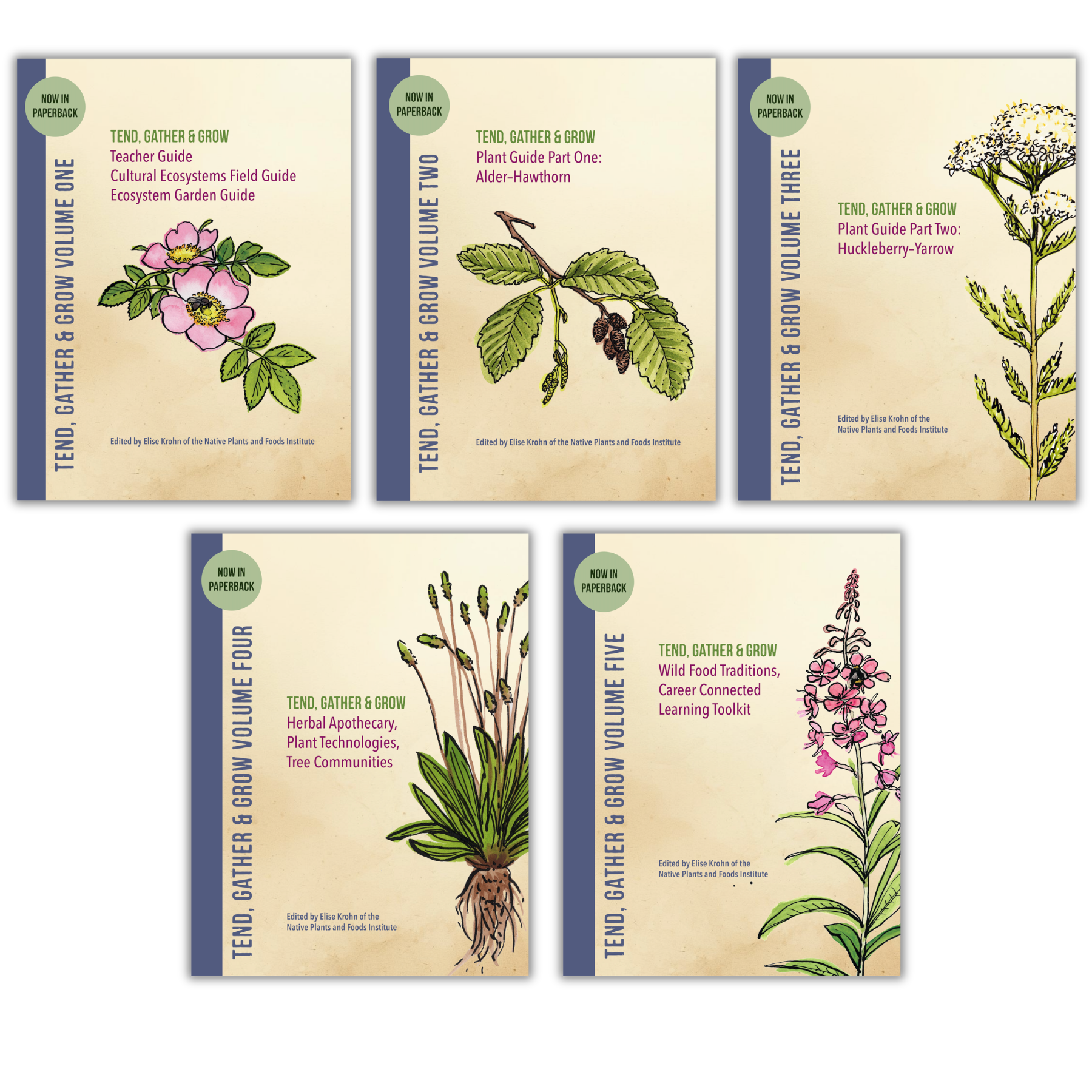 Image 1 of 2
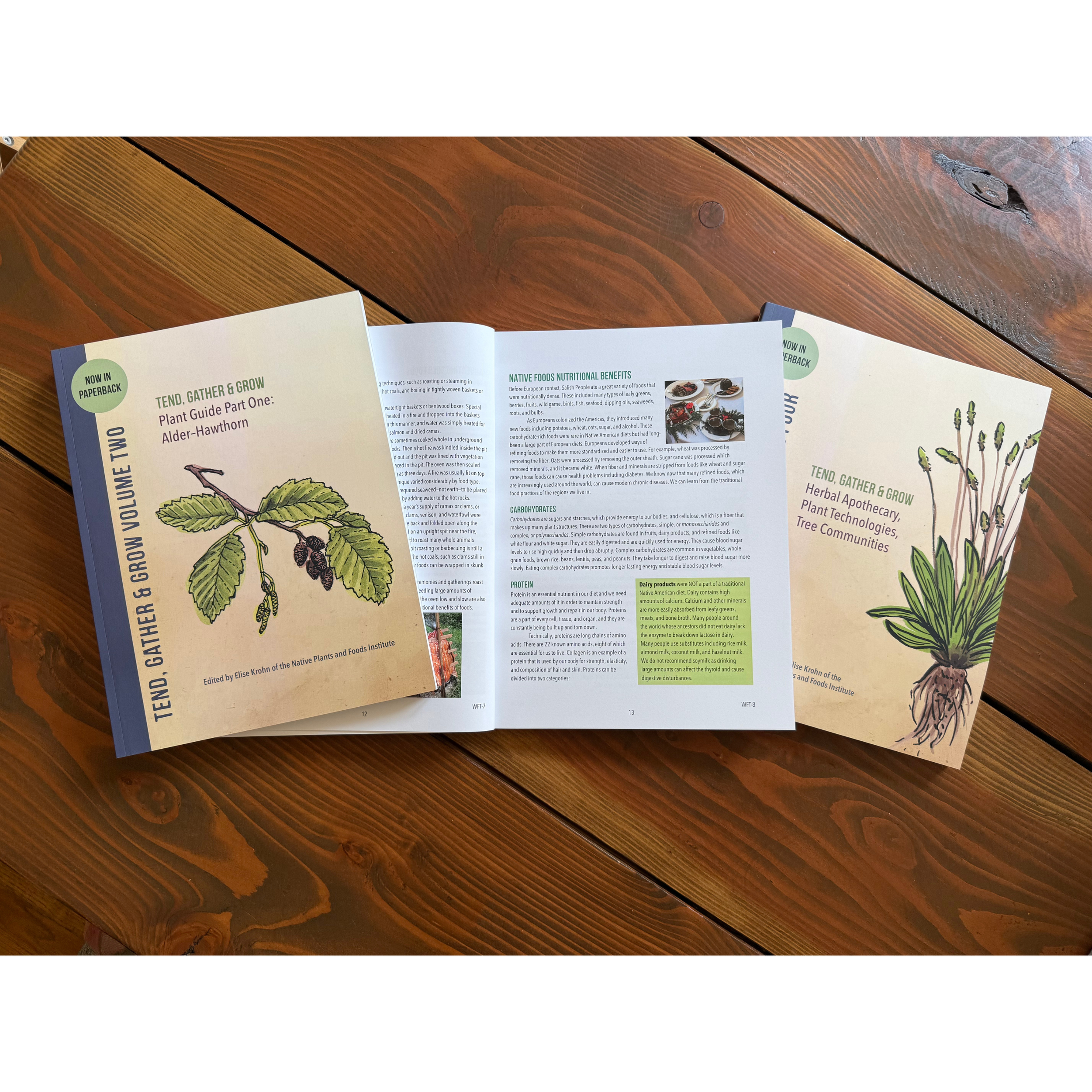 Image 2 of 2